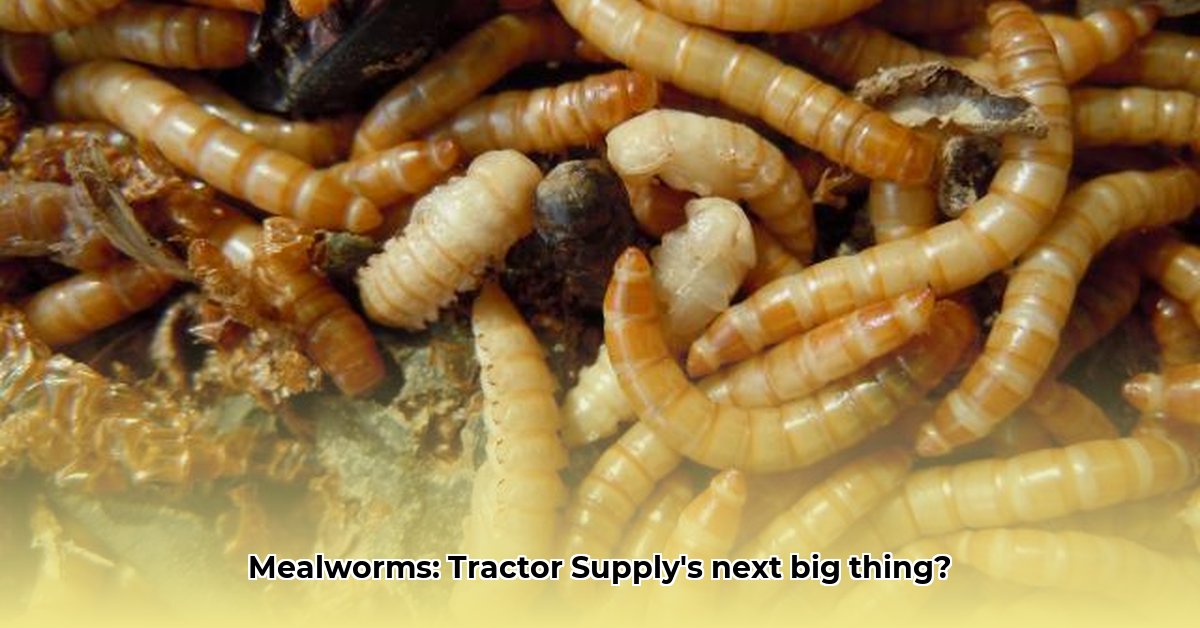
Mealworms Tractor Supply: A Quiet Revolution in Sustainable Farming
The presence of mealworms on Tractor Supply shelves marks a significant, albeit understated, shift in agricultural practices. This readily available insect protein source signals a growing acceptance of entomophagy (the practice of eating insects) and its role in creating a more sustainable food system. While precise sales figures remain elusive—a characteristic of nascent markets—the mere availability of mealworms at such a prominent retailer speaks volumes about their expanding market presence. For more on Tractor Supply's pet products, check out this page. This is a story about small creatures with a potentially enormous impact. Is this the beginning of the mainstream adoption of insect-based protein?
Why the Sudden Interest in Mealworms?
Several interconnected factors fuel the rising demand for mealworms. The urgency of climate change and the environmental footprint of conventional livestock farming are driving the search for eco-friendly alternatives. Insect farming boasts a considerably lower environmental impact – using less land, water, and energy compared to traditional animal agriculture, resulting in a significantly reduced carbon footprint. This is particularly relevant given that the average American consumes over 200 pounds of meat per year. Furthermore, mealworms are nutritionally dense, offering a valuable protein source for animal feed. Simultaneously, the increasing consumer awareness of environmental and ethical food production fuels demand for products like mealworm-based animal feed.
Mealworms at Tractor Supply: What the Market Tells Us (or Doesn't)
Obtaining precise sales data on mealworms at Tractor Supply currently proves challenging. Publicly available information, such as product descriptions, does not offer the granular level of details needed for a comprehensive market analysis. This data scarcity is typical for emerging industries, where robust data often lags behind rapid market growth. However, this lack of detailed figures isn't entirely negative; it suggests a market ripe for significant expansion and innovation. What opportunities might this early stage present for forward-thinking entrepreneurs?
The Key Players Shaping the Mealworm Market
A dynamic interplay of stakeholders is driving the mealworm market's expansion:
- Insect Farmers: These entrepreneurs are expanding operations to meet escalating mealworm demand, effectively forming the backbone of this burgeoning industry. Their success hinges on efficient production and a sustainable supply chain.
- Feed Manufacturers: Recognizing the nutritional value and sustainability advantages, these manufacturers are actively integrating mealworms into animal feed formulations, catering to the growing market demand for eco-conscious animal agriculture.
- Farmers: The adoption of mealworms as supplemental animal feed is paramount; farmers are directly contributing to the market’s expansion. Their experience and feedback are invaluable.
- Consumers: Increasing consumer concern about climate change and the sustainability of food supply chains directly influences demand for environmentally friendly products, including mealworm-based animal feed. This demand is driving innovation within the industry.
- Retailers (like Tractor Supply): The decision by major retailers to stock mealworms signifies a considerable leap in market accessibility and acceptance, paving the way for broader adoption.
The Future of Mealworms and Insect-Based Protein
The outlook for mealworms and the broader insect-based protein sector appears exceptionally promising. We can anticipate:
- Technological Advancements in Production: Expect significant improvements in farming techniques, aiming for increased efficiency and reduced costs. This will make mealworm production more commercially viable.
- Expansion into Human Food Markets: Mealworms could become a more commonplace ingredient in human food products. This could involve innovative uses in everything from protein bars to alternative meat products.
- Further Scientific Research: Ongoing research will likely deepen our understanding of mealworms' nutritional properties and environmental advantages, further bolstering their appeal.
- Regulatory Framework Evolution: The emergence of clearer industry regulations and standards will foster greater trust and confidence in the insect-based protein sector.
- Increased Consumer Acceptance: As public awareness and understanding of insect-based protein's benefits grow, so too will consumer acceptance and demand.
In conclusion, the appearance of mealworms at Tractor Supply reflects a broader trend toward sustainable agriculture and more responsible food production. While challenges undoubtedly remain, the potential of insect-based protein, particularly mealworms, is undeniable. The future may well be paved—quite literally—with these tiny, nutrient-rich creatures.